
Introduction
Learning how to monitor construction site quality involves checking materials, verifying workmanship, following approved drawings, and inspecting each stage of construction against specified standards. These checks help identify defects early, reduce rework, and support the durability of a building. For buyers exploring premium residential developments, Hirize Elysia in Kokapet is a project to evaluate using these quality checks alongside its documented specifications, apartment layouts, and residential features.
Why Is Construction Site Quality Monitoring Important?
Construction quality monitoring ensures that materials, construction methods, and completed work meet the project's approved requirements. Without regular inspections, minor errors can lead to costly repairs, delays, and long-term maintenance concerns.
A consistent monitoring process helps teams:
- Identify construction defects before they become difficult to correct.
- Verify that materials meet specified requirements.
- Maintain consistency in workmanship.
- Reduce avoidable rework and material waste.
- Keep inspection records for accountability and future reference.
For property buyers, understanding these checks also helps them ask informed questions before choosing a residential project.
How to Monitor Construction Site Quality Step by Step
1. Verify Drawings and Specifications
Begin by reviewing the latest approved architectural, structural, and service drawings. Check dimensions, material specifications, construction details, and applicable acceptance criteria.
Site teams should work from current approved documents. If actual site conditions differ from the drawings, the discrepancy should be referred to the responsible engineer before proceeding.
2. Inspect Materials Before Use
Material quality affects the strength, durability, and performance of a building. Inspect deliveries before materials are incorporated into construction.
Important checks include:
- Verifying cement, steel, aggregates, and other materials against project specifications.
- Reviewing supplier certificates and test reports where required.
- Checking storage conditions to prevent moisture damage or contamination.
- Arranging sampling and laboratory testing according to the approved inspection plan.
For concrete, follow specified procedures for sampling, fresh concrete testing, and strength testing. Appearance alone cannot establish whether a material meets the required standard.
3. Monitor Workmanship at Every Stage
Quality inspections should take place throughout construction, not only after work is completed.
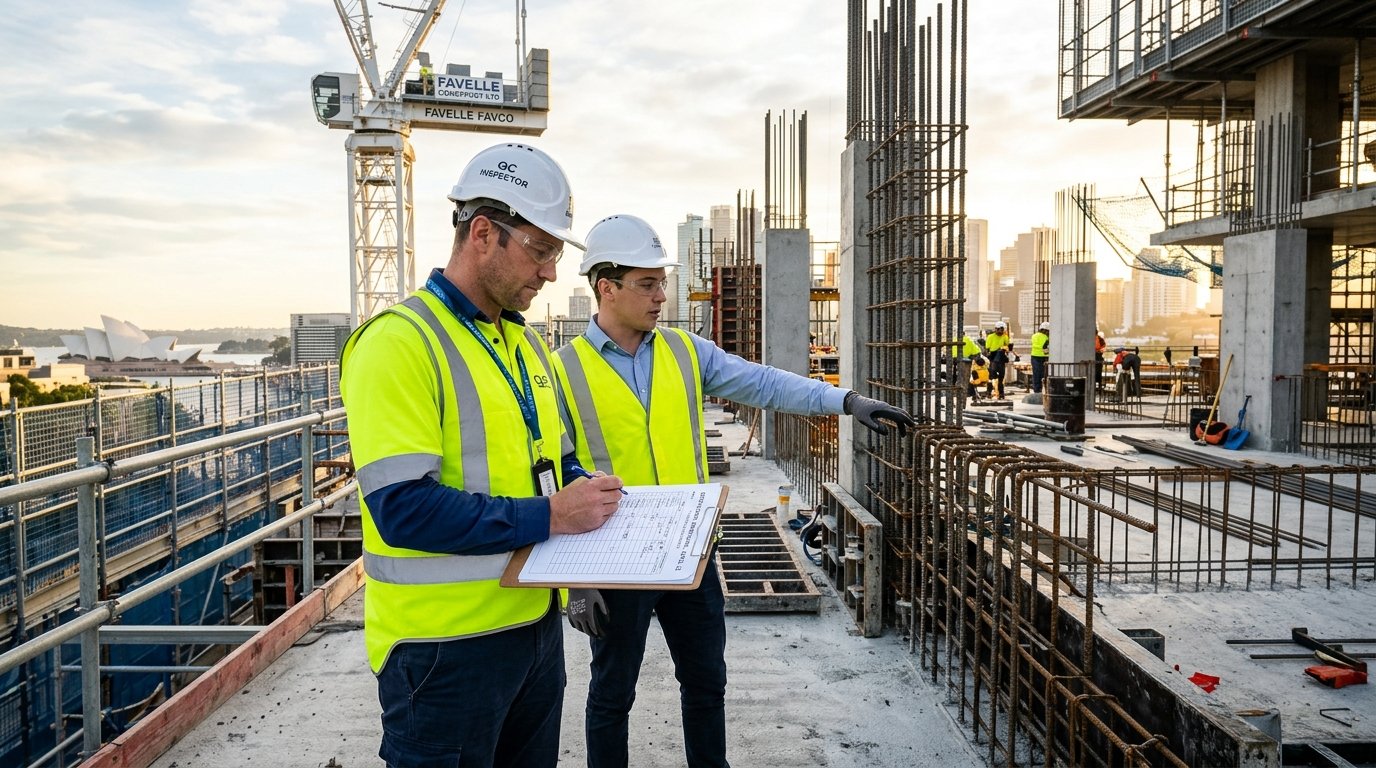
For example, before a concrete pour, inspect reinforcement placement, concrete cover, formwork, and embedded items. During masonry work, check alignment, dimensions, and joint consistency. For finishing work, examine plaster surfaces, tile alignment, levels, and visible defects.
Always complete required inspections before covering concealed work, such as reinforcement, waterproofing layers, or embedded services.
4. Use a Construction Quality Checklist
A standard checklist helps site engineers follow consistent inspection procedures.
| Construction activity | Key quality checks |
|---|---|
| Foundation | Excavation dimensions, founding conditions, reinforcement |
| Structural work | Formwork, steel placement, concrete testing |
| Masonry | Alignment, dimensions, joints |
| Waterproofing | Surface preparation, application, specified testing |
| Finishing | Levels, tile alignment, surface defects |
The inspection frequency and acceptance criteria should follow approved project specifications and applicable standards.
5. Document Defects and Corrective Actions
Inspection without documentation makes it difficult to track unresolved issues. Maintain site inspection reports, material test results, photographs, approval records, and non-conformance reports.
When a defect is identified, record its location, assign responsibility, set a correction deadline, and reinspect the work before closing the issue. Digital reporting tools can help teams organize evidence and monitor outstanding actions.
What Should Homebuyers Check When Evaluating Construction Quality?
Buyers should ask relevant questions and review available documentation rather than relying only on photographs or verbal assurances.
Consider these checks:
- Review the approved plans and applicable project approvals.
- Ask about material testing and inspection procedures.
- Understand how construction defects are recorded and rectified.
- Examine visible workmanship during an authorized site visit.
- Verify project specifications and completion-related documentation where applicable.
For buyers considering Hirize Elysia, the project's published specifications include 371 apartments across three towers, apartment sizes from 1,165 to 3,380 sq. ft., and sustainability-focused features. Buyers should verify the relevant approvals, construction-stage information, and quality documentation directly with the project team.
Conclusion
Knowing how to monitor construction site quality helps project teams identify defects early, maintain consistent workmanship, and reduce avoidable rework. Drawing verification, material inspections, stage-wise checks, testing, and accurate documentation form the foundation of an effective quality control process.
If you are exploring premium residential properties in Kokapet, consider Hirize Elysia and review its published specifications and available project documentation. Ask the right questions, verify the relevant records, and make your decision based on clear information rather than appearance alone.
Interested in Hirize Elysia?
Frequently Asked Questions
1. How can construction site quality be monitored effectively?
Construction quality can be monitored through regular site inspections, material testing, workmanship checks, and documentation at every construction stage.
2. What should buyers check before choosing a residential project?
Buyers should review applicable approvals, construction specifications, material quality records, and workmanship. Hirize Elysia offers premium apartments in Kokapet, and buyers can explore its project details and request relevant documentation before making a decision.
3. What construction quality features should buyers look for in a premium apartment?
Buyers should look for documented quality checks, appropriate material testing, and construction that follows approved specifications. When considering Hirize Elysia, buyers can contact the project team to understand the applicable inspection procedures and available quality documentation.
4. Why is construction quality documentation important?
Quality documentation records inspections, test results, approvals, and corrective actions. It helps establish accountability and provides a reference for verifying whether the required construction checks have been completed.
5. How can buyers evaluate a residential project before purchasing an apartment?
Buyers should compare apartment layouts, project specifications, applicable approvals, and available construction records. Hirize Elysia in Kokapet offers apartment sizes ranging from 1,165 to 3,380 sq. ft., along with two clubhouses and smart-home features for buyers exploring premium residential living.